Plant of the Week

To match the different seasons, we regularly present particularly worthwhile garden plants – the plant of the week – from HORTVS.

These plants are usually available in our nursery (direct sales, no shipping). Pre-orders are recommended, as the quantities we produce are limited.

Plant of the Week

KW 38

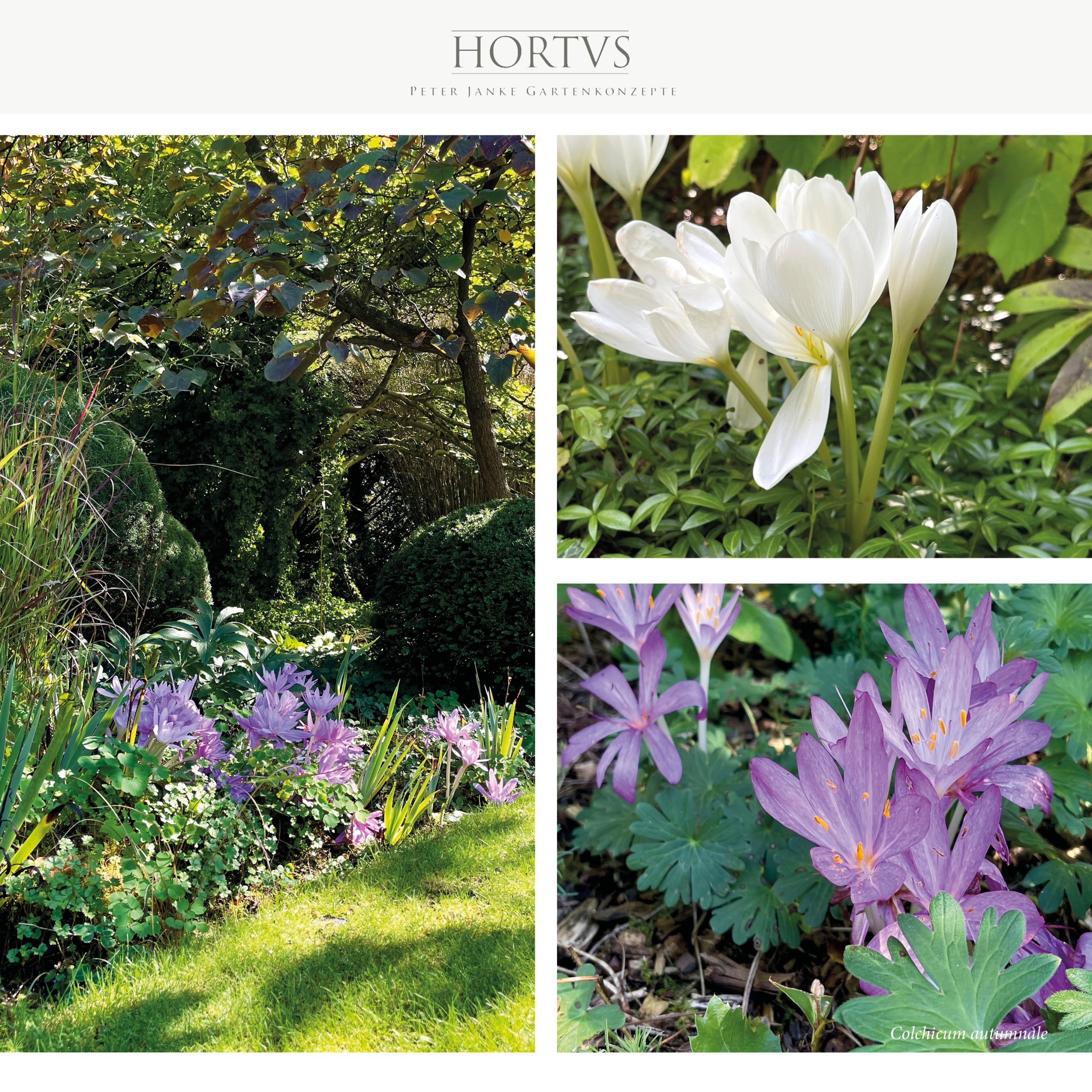
Colchicum autumnale – Autumn Crocus

A bulbous plant that has become an indispensable part of our HORTVS. In the fall, it pushes its elegant flower calyxes out of the ground in great numbers, completely leafless. This leafless “nakedness” earned them the name “Naked Ladies” in England. The lush, glossy foliage appears (without flowers, of course) in the spring and fills many areas that haven’t yet turned green. In early summer, the foliage withers away, before the flowers reappear in the fall as if out of nowhere. This unusual life cycle makes the autumn crocus a truly special sight in the garden. Colchicum thrives in almost any garden setting. The autumn crocus does particularly well in sunny to partially shaded locations with fresh to moist, nutrient-rich soil. Once established, it is long-lived and can form impressive clumps over the years. All parts of this plant are highly poisonous! The autumn crocus contains the highly toxic alkaloid colchicine. Special caution is advised in the spring, as its leaves can be mistaken for those of wild garlic.

Plant of the Week

KW 36

Cortaderia selloana ‘Sunningdale Silver’ – Pampas grass ‘Sunningdale Silver’
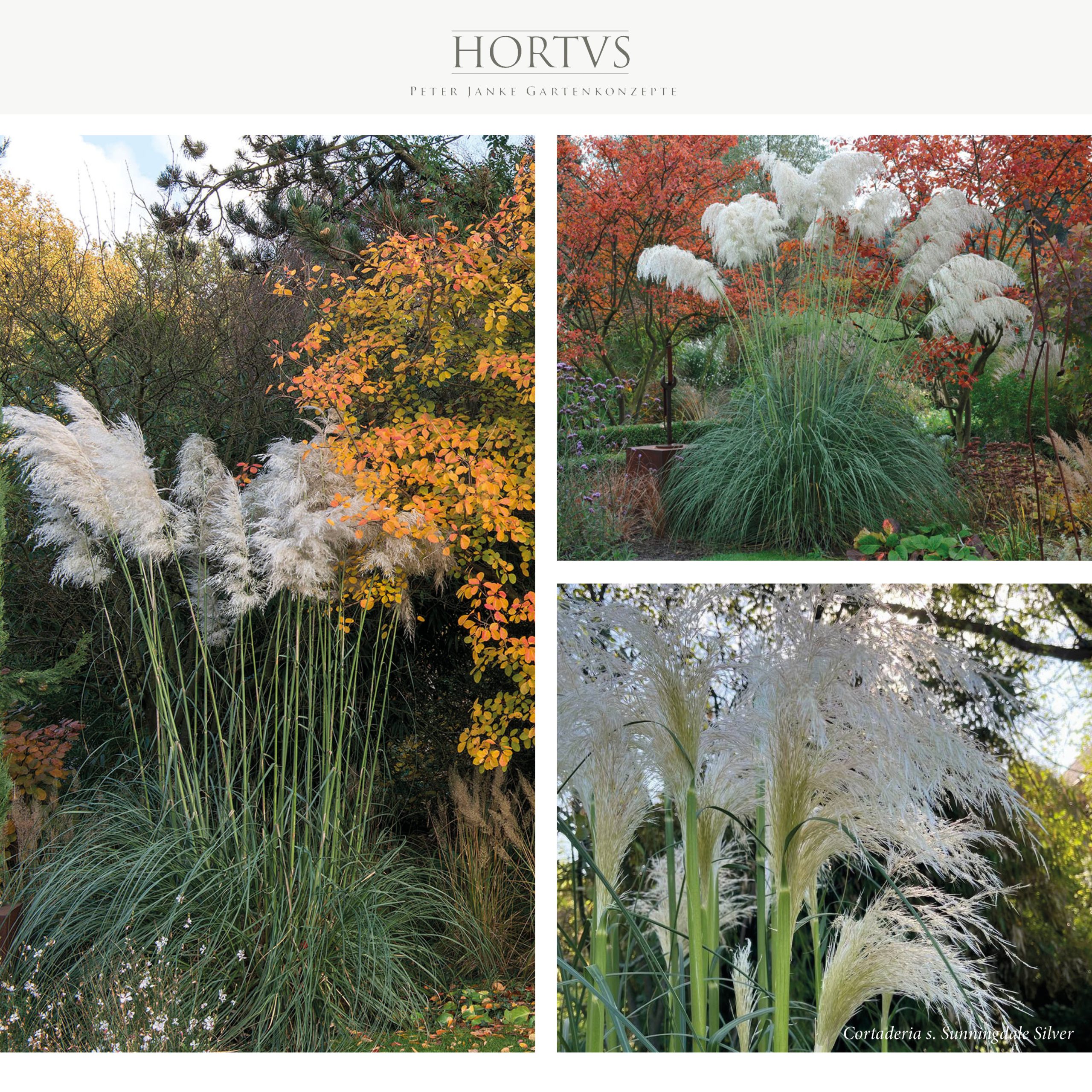
Pampas grasses have—perhaps rightly so—a dubious reputation: old-fashioned, stuffy, non-native; in southern Europe (and soon here as well?), some species are classified as invasive. In the past, their winter hardiness was also considered insufficient. But: As with almost every spurned genus, there are exceptions! Cortaderia selloana ‘Sunningdale Silver’ is a “must-have plant.” I know of no other tall grass with such elegance and lightness. Yet it makes a design impact that’s second to none. (Semi-)evergreen, extremely long-lived, frost-hardy, well-suited to the climate—wonderful! A statement piece that no large garden should be without! Be careful when buying: Unfortunately, there are various counterfeit varieties on the market, so be sure to buy only from reputable perennial nurseries!

Plant of the Week

KW 35

Chionochloa rubra – Red-brown tussock sedge
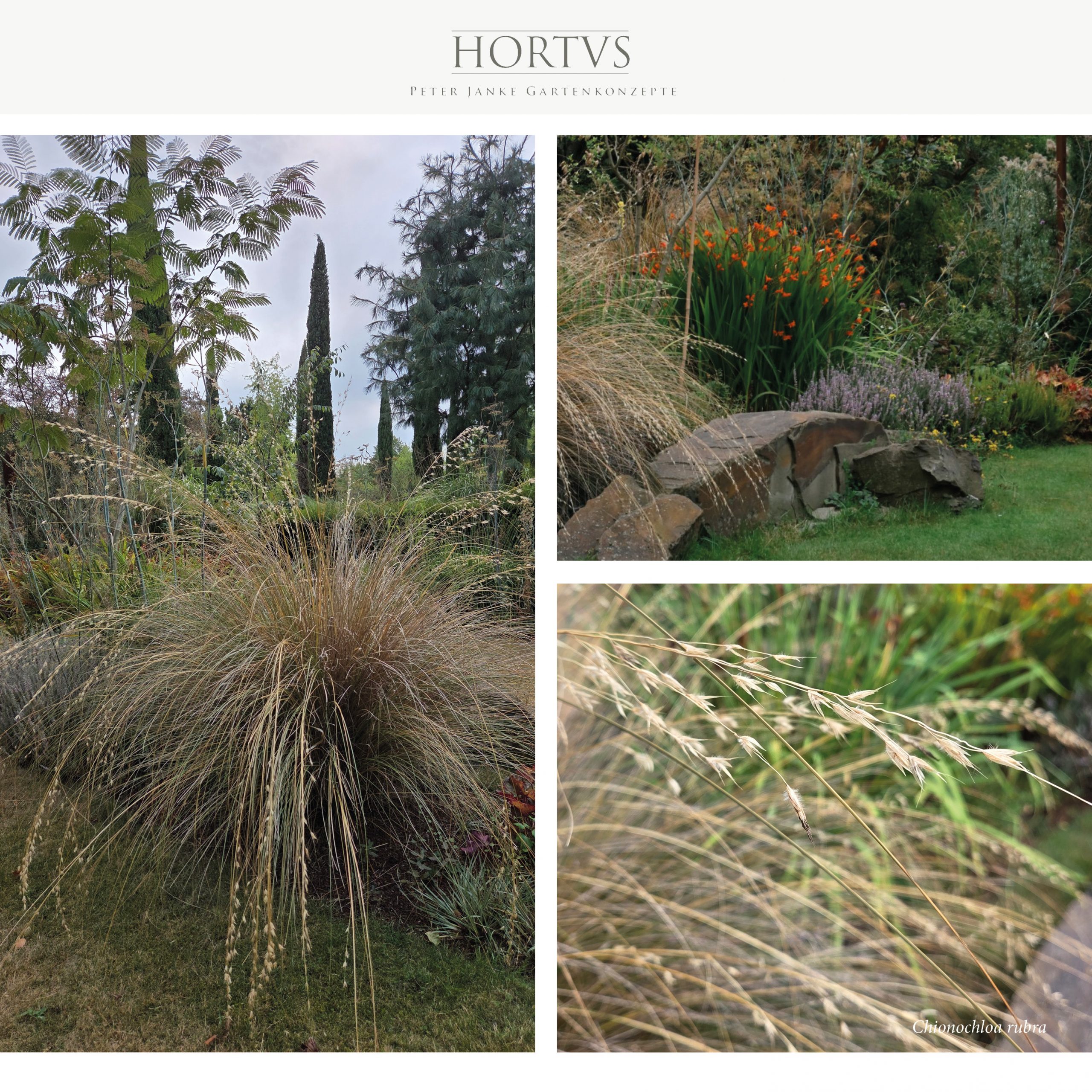
It never ceases to amaze me that there are so many perennials that are perfectly suited for the garden but are rarely found in garden centers. Chionochloa rubra, native to the shortgrass steppes of the New Zealand Alps, is certainly one of these hard-to-find garden treasures. The completely winter-hardy tussock grass combines all the desirable qualities for a garden: It is incredibly elegant, evergreen—or rather, always red—it doesn’t produce runners, and it doesn’t go to seed in our climate. It tolerates both dry and wet conditions equally well, and the possibilities for combining it with other plants are almost unimaginable—yet it requires absolutely no care. Unfortunately, it is very difficult to propagate, so the few nurseries that carry it have to charge a fair price. – A gem that no garden suited to this climate should be without.

Plant of the Week

KW 34

Hylotelephium telephium and Euphorbia – Common stonecrop and spurge
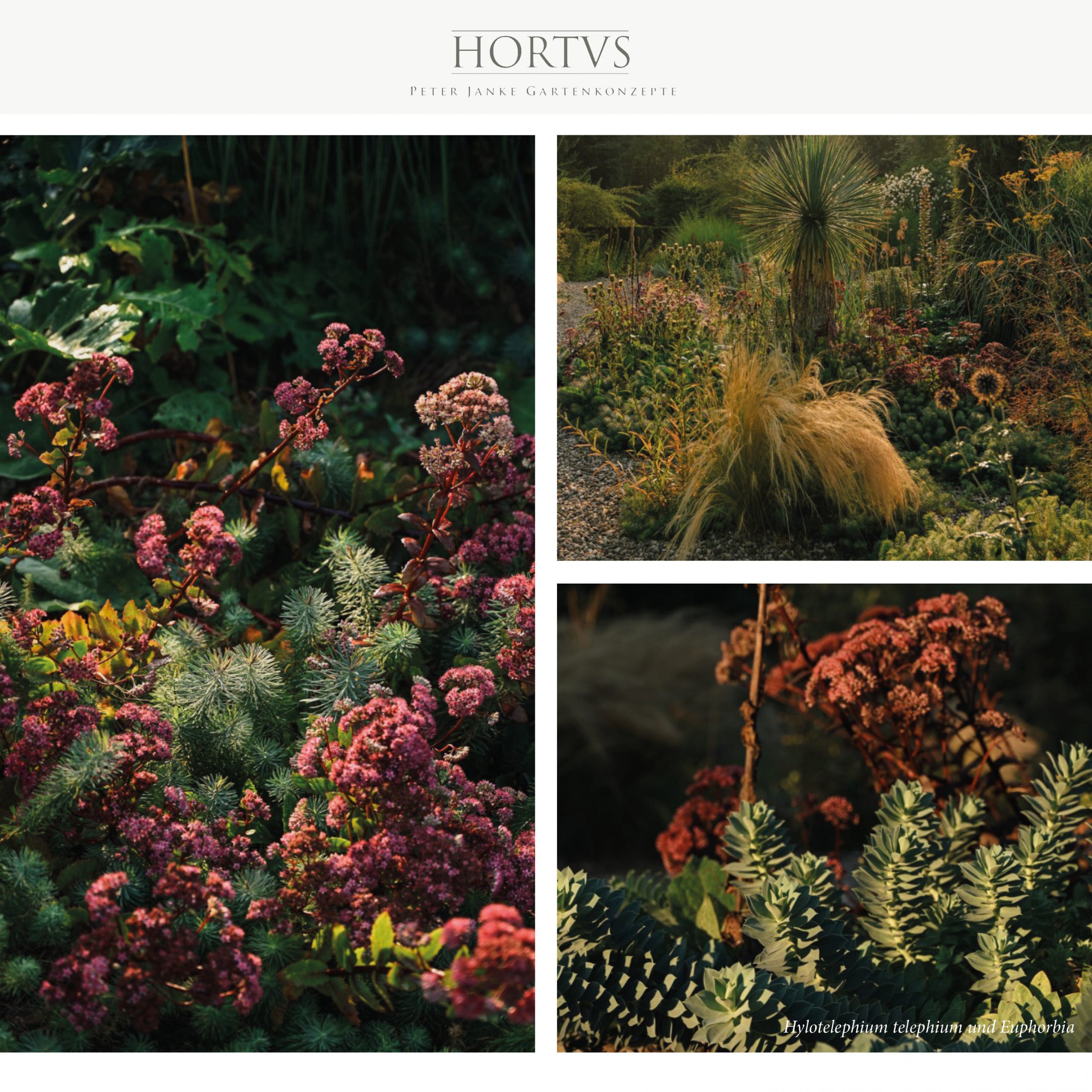
In this yet another absurdly dry week in the garden, I’d like to introduce a pair of perennials that has never disappointed us in 20 years at HORTVS: Hylotelephium telephium combined with Euphorbia. The former is better known to many by the outdated genus name “Sedum,” while the latter belongs to a circumpolar genus comprising a wide variety of perennials, succulents, and shrubs. The common stonecrop is just as native as the cypress spurge (Euphorbia cyparissias) shown in Photo 1. The second photo shows a red-leaved variety of stonecrop paired with the Mediterranean spurge (Euphorbia myrsinites). It’s not just the incredible drought and heat tolerance of both genera that makes them so valuable as a garden duo. Their different blooming seasons (Euphorbia = March–April, Hylotelephium = July–September) are also perfect for creating a garden that remains attractive year-round. Insects are incredibly drawn to both plants!

Plant of the Week

KW 32

Erigeron karvinskianus – Spanish daisy
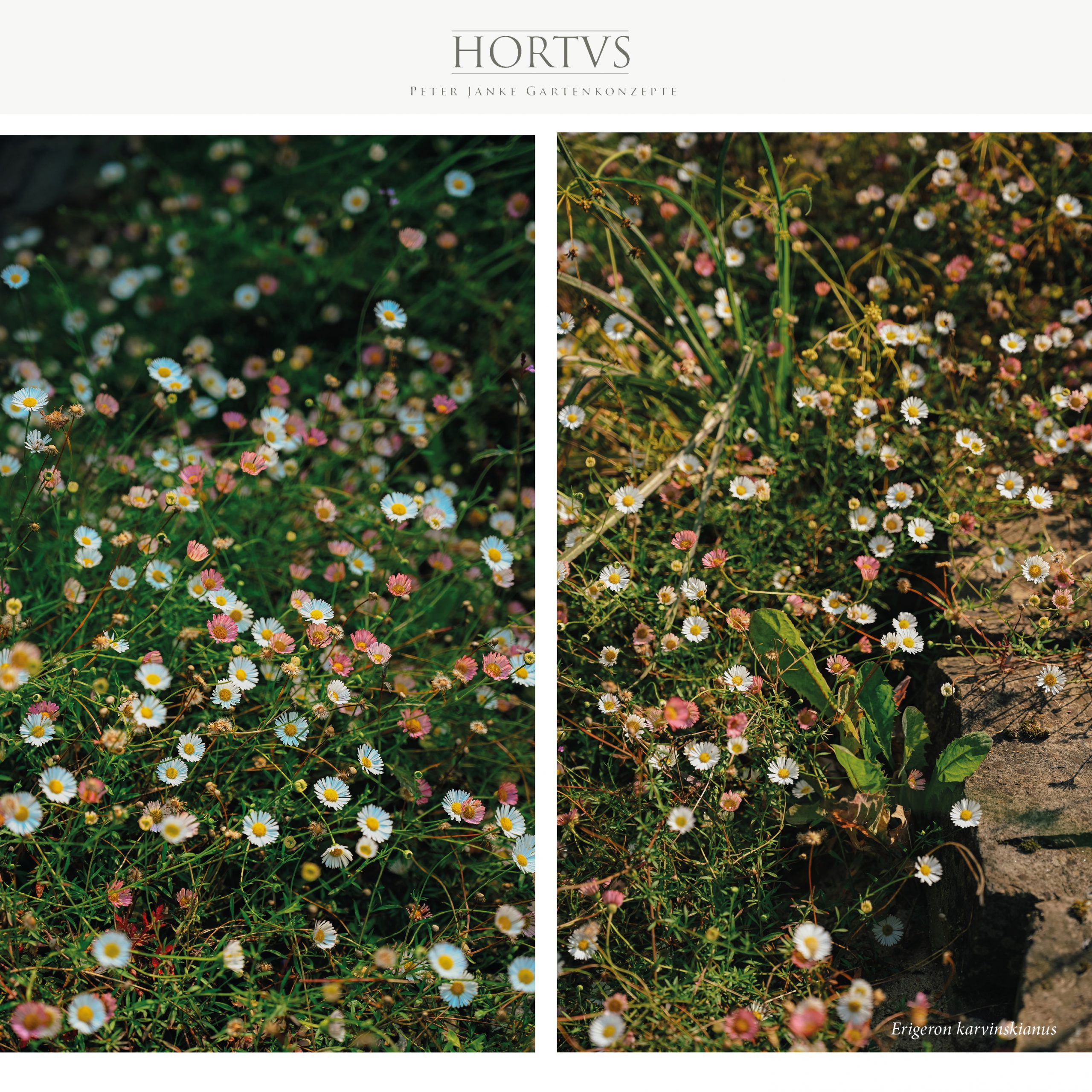
This low-maintenance little perennial has become a garden favorite in recent years—and rightly so! In warm, sunny garden soil, Erigeron karvinskianus grows vigorously and blooms profusely, reliably delighting gardeners with a seemingly endless display of flowers. The Spanish daisy prefers poor, well-drained soil in full sun and is ideal for planting in pots, planters, and along wall joints. In suitable locations, it thrives wonderfully and even performs well in green roof substrates.

Plant of the Week

KW 31

Allium senescens ssp. montanum – Mountain Garlic
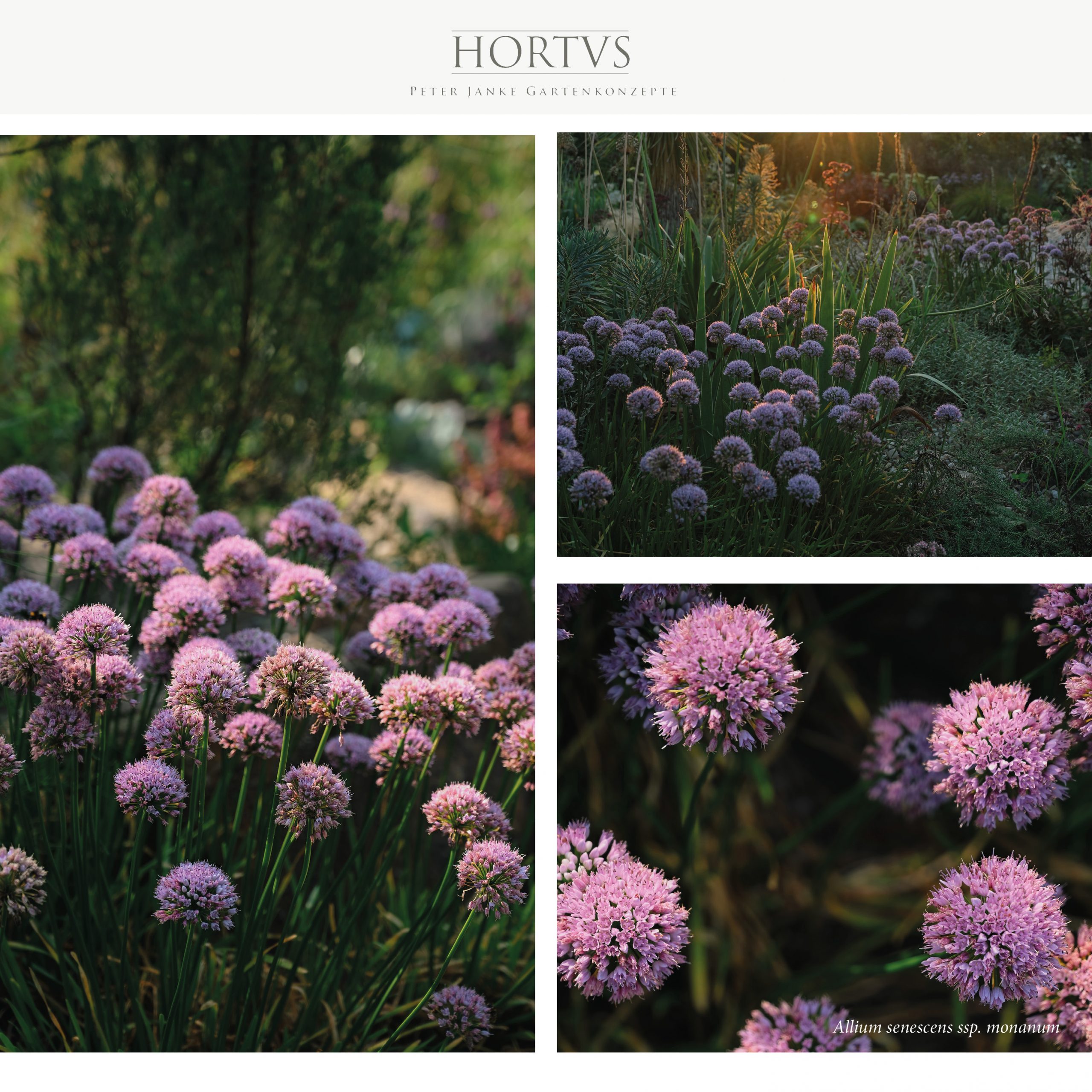
One of the best ornamental alliums for a sunny, hot garden! Although this indestructible flowering wonder is difficult to classify taxonomically and should nowadays be attributed to the European mountain garlic (Allium lusitanicum), it captivates gardeners with its uncompromising simplicity and beauty. Mountain chives combine so many desirable gardening qualities that it’s hard to believe: They feature fresh, green, glossy foliage that looks great throughout nearly the entire growing season. They thrive in hot, full-sun garden locations and never need to be fertilized or watered. It can withstand not only extreme heat but also the coldest winter temperatures. It doesn’t go to seed or produce runners—the clumps simply become more lush from year to year and produce more and more flowers. I like to combine mountain chives in the foreground of the bed with low-growing groundcovers such as cushion thyme or red-leaved spiny-headed acaena (Acaena inermis 'Purpurea'), but it’s also ideal for low-growing mixed plantings alongside sea thrift (Armeria), hardy petunias (Ruellia), stonecrops (Sedum), bearded irises, and suitable small gravel-garden grasses.

Plant of the Week

KW 30

Lilium ‘Black Beauty’ – Oriental Garden Lily (Oriental Hybrid)
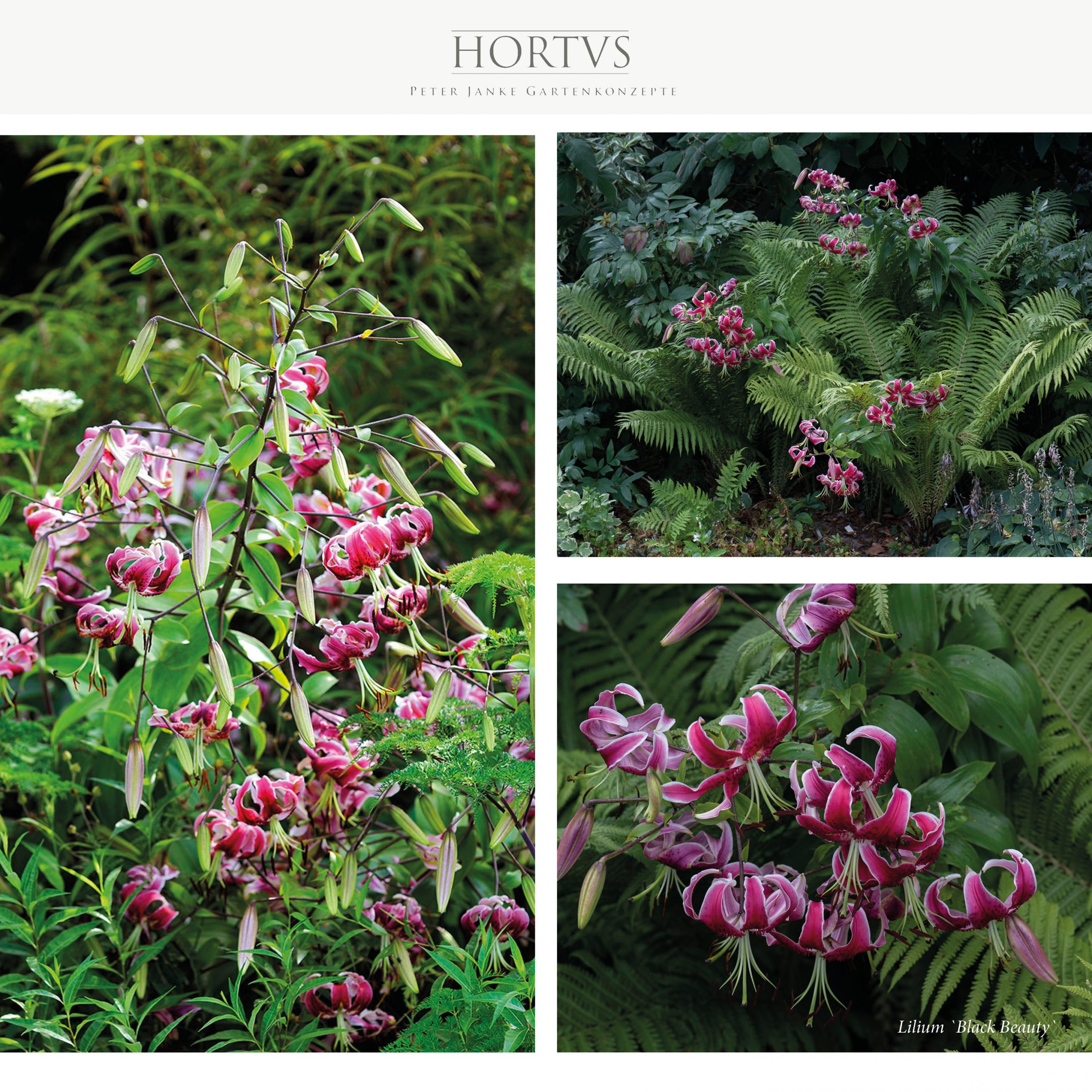
Lilium ‘Black Beauty’ is undoubtedly one of the most striking and hardy garden lilies. Its brilliant, deep raspberry-red, white-edged flowers with elegantly reflexed petals float above the flower beds in midsummer, when many other garden perennials are already looking a bit tired. It thrives best in a sunny to partially shaded location in humus-rich, well-drained soil. With its upright growth habit, it adds height and structure to the planting and can be combined in many ways with perennials. It is also highly competitive—at HORTVS, these exquisite summer bloomers have been growing for many years amidst dense stands of ostrich fern (Mattheuccia strutiopteris). From July through August, numerous large flowers appear on stems up to two meters tall. They attract bees and butterflies and also make excellent long-lasting cut flowers. Lilium ‘Black Beauty’ becomes more and more impressive as the years go by. Well-established plants produce an increasing number of flower stalks and ensure abundant blooms every summer. It is one of the long-lived lilies that thrive in the same location for many years, steadily gaining in presence.

Plant of the Week

KW 29

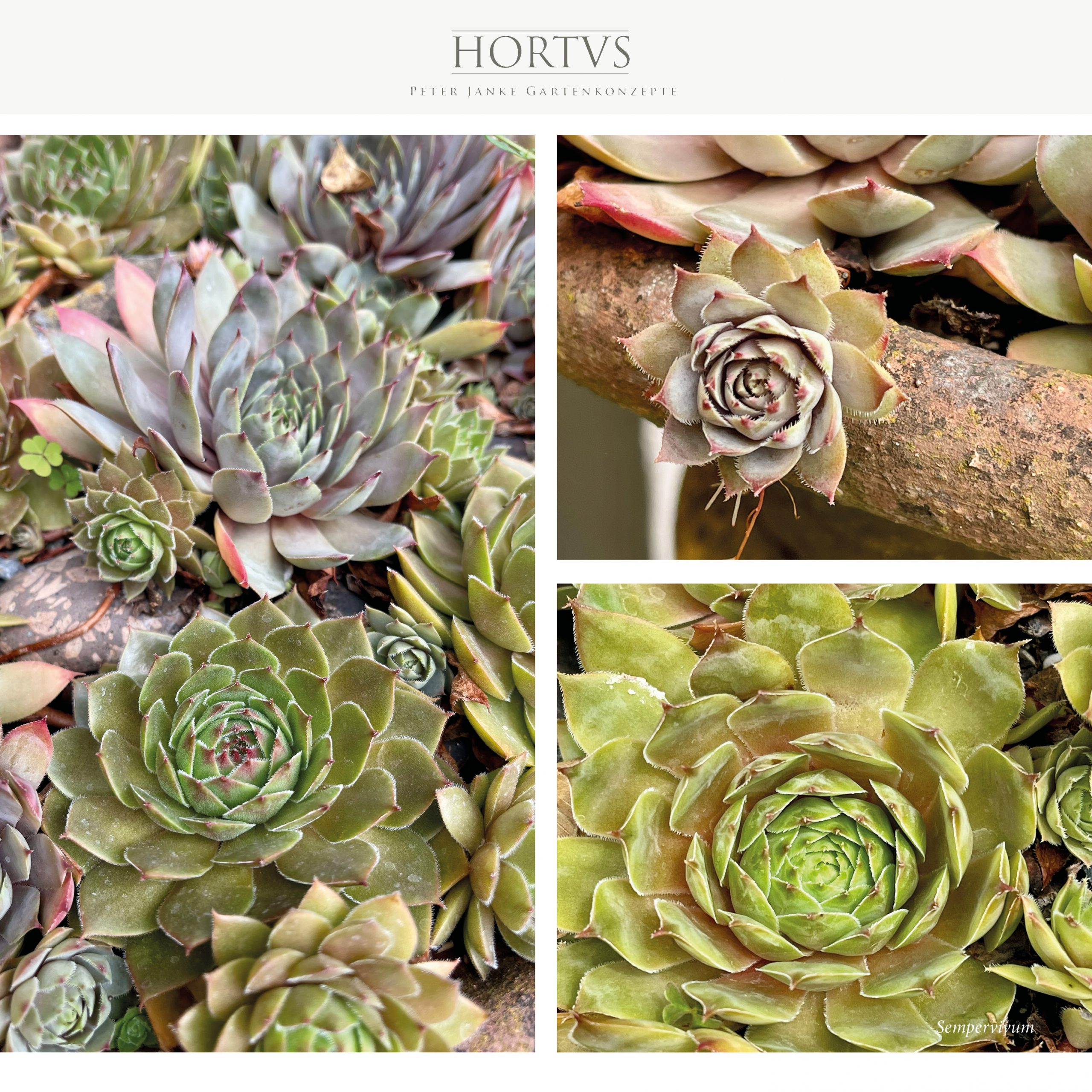
Sempervivum – House Plant

Few plants are as low-maintenance as the houseleek. With its decorative rosettes in shades of green, blue, red, or purple, it adds a beautiful touch all year round and thrives in places where many other plants would have long since given up. Whether in a rock garden, on dry stone walls, in a gravel bed, or in a pot—Sempervivum thrives in sunny locations and well-drained, somewhat dry soil. Thanks to its high tolerance for drought, it is the ideal plant for low-maintenance gardens. Depending on the variety, pink, red, or yellowish flowers appear on tall stems from June through August, attracting numerous bees and other insects. After flowering, the individual rosette dies back, but is already being replaced by many daughter rosettes. Over time, this results in dense, attractive clumps that provide enjoyment for many years.

Plant of the Week

KW 27

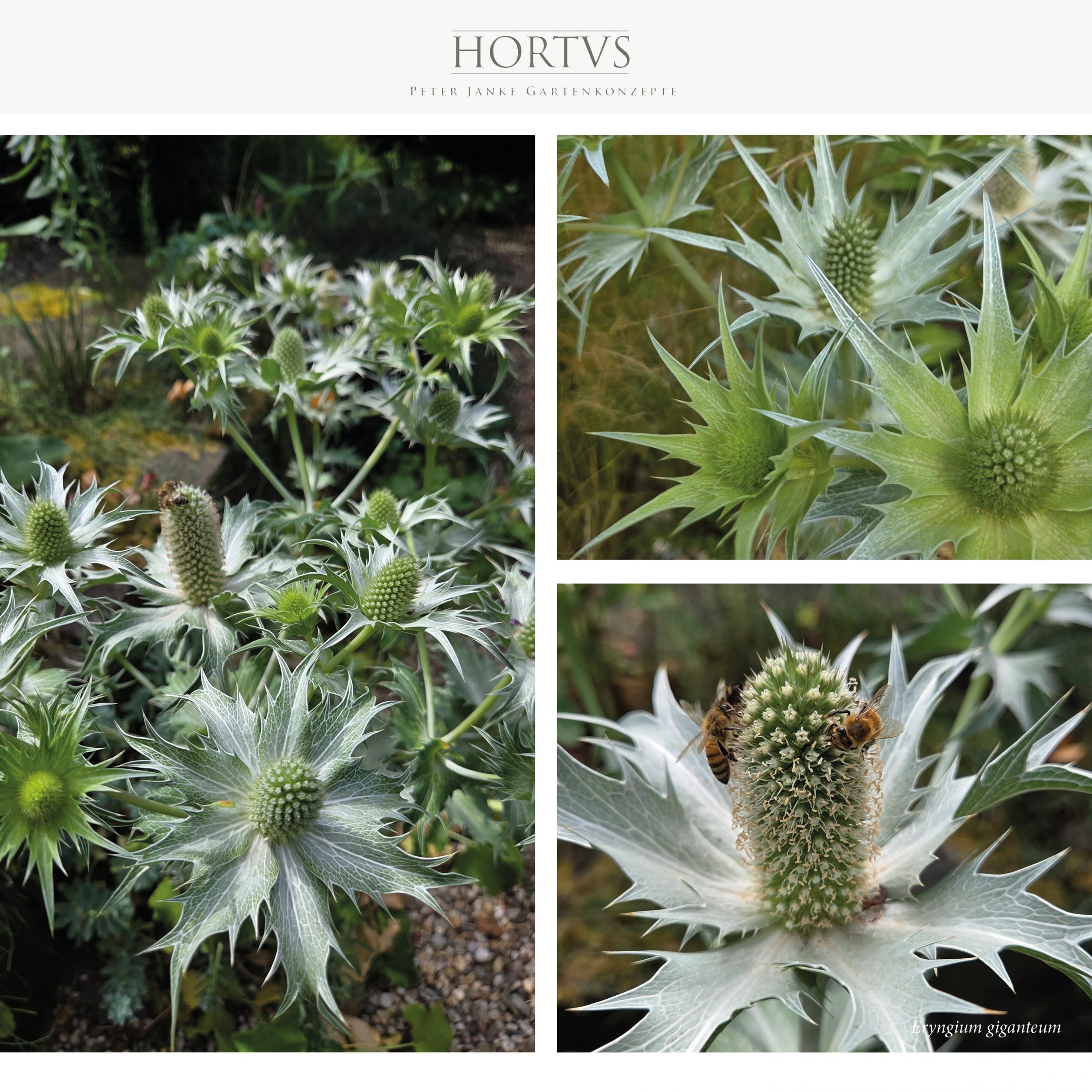
Eryngium giganteum – Riesen-Mannstreu

In England wird diese elegante Edeldistel auch „Miss Willmot’s Ghost“ genannt, da die englische Ausnahmegärtnerin Helen Willmot der Legende nach kurz vor ihrem Tod in den wichtigsten Gärten der Britischen Inseln Saatgut dieser einmaligen Pflanze verstreut haben soll. Eryngium giganteum ist eine zweijährige Schönheit, die sich an trockenen, karg-warmen Gartenorten in voller Sonne wohlfühlt. Sie erhält sich im Garten zuverlässig durch Selbstaussaat, wobei die Sämlinge und Jungpflanzen mit ihrem saftig grünen, kaum bewehrten Laub nicht erahnen lassen, welch silbern schimmernden Blütenschmuck sie hervorbringen. Die irisierende Quecksilberfarbe fügt sich perfekt in jedes Garten-Farbschema ein und zieht unzählige Insekten an. Wir lassen den schönen Fruchtschmuck bis weit in den Winter in unseren Kiesgartenbeeten stehen und freuen uns über die Unkompliziertheit und die Ausdruckstärke dieses Distel-Meisterwerks.

Plant of the Week

KW 26

Santolina etrusca – Etruscan Saint’s Herb
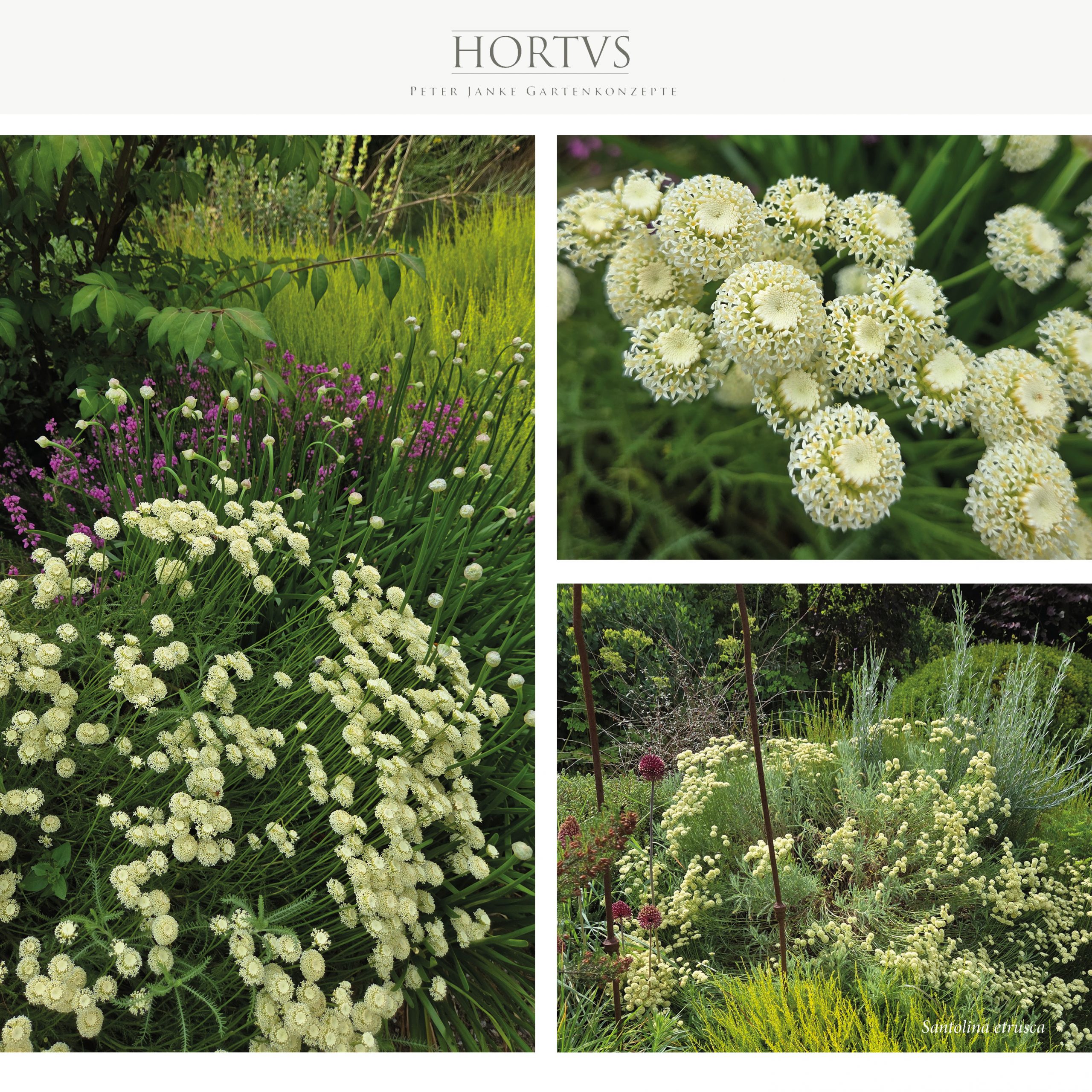
Santolina etrusca is a Mediterranean subshrub with silvery-gray, finely pinnate foliage. From June through August, numerous cream-white to pale yellow flower heads adorn the upright stems, creating a beautiful contrast to the decorative foliage. These aromatic plants are attractive throughout the gardening season and lend an elegant air to gravel gardens and sparse, sunny beds. This low-maintenance plant prefers a sunny location and well-drained, somewhat dry soil. Thanks to its high tolerance for drought, it is ideal for natural and Mediterranean-style plantings and also provides a valuable food source for numerous insects. Pruning it back by about one-third immediately after flowering maintains its compact form and increases the number of flowers the following year.

Contact

HORTVS
Peter Janke Gartenkonzepte
Hochdahler Straße 350
40724 Hilden

Office & Nursery:
Fon: +49 (0)2103 360508

Gardenshop & Floristry:
Fon: +49 (0)2103 396556
Fax: +49 (0)2103 2788092

E-Mail: mail@peter-janke-gartenkonzepte.de

Opening Hours

Garden & Nursery

April bis Oktober:
Do. und Fr. 10.00 bis 18.00 Uhr;
Sa. 10.00 bis 16.00 Uhr

March and November:
Thu. and Fri. 10.00 am to 5.00 pm;
Sat. 10.00 to 3.00 pm 10.00 bis 17.00 Uhr;
Sa. 10.00 bis 15.00 Uhr

Gardenshop & Floristry

April to November:
Thu. and Fri. 10.00 am to 6.00 pm;
Sat. 10.00 to 4.00 pm

March and December:
Thu. and Fri. 10.00 am to 5.00 pm;
Sat. 10.00 to 3.00 pm

Office
Our office can generally be reached Tuesdays to Fridays from 9.30 am to 4.30 pm. On Bank holidays the HORTVS
remains closed!

Entrance Garden:
5 € (up to 17 years free)
Annual Ticket „Garden‘s Friends“: 25 €

Auszeichnung Gärten des Jahres 2024, Peter Janke Gartenkonzepte
20 Jahre Peter Janke Gartenkonzepte