
Eryngium giganteum – Riesen-Mannstreu
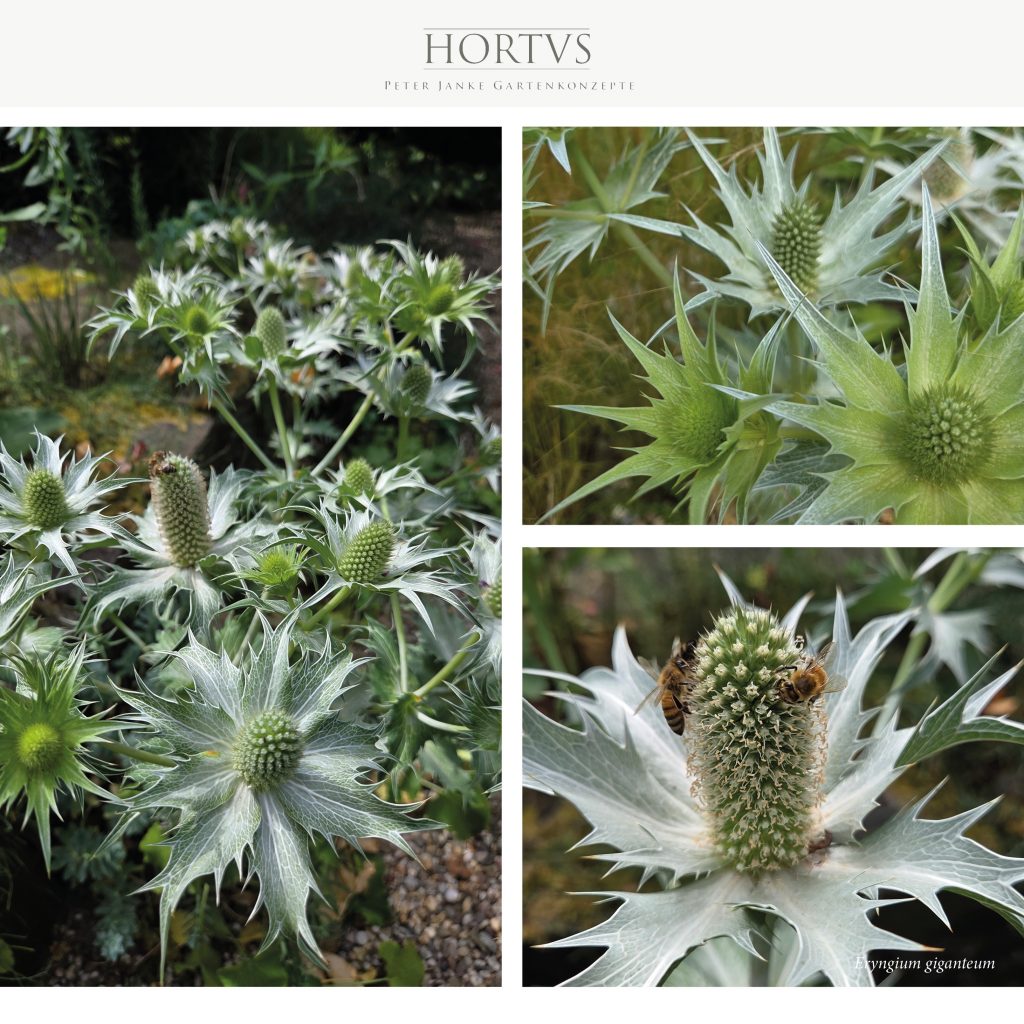
In England wird diese elegante Edeldistel auch „Miss Willmot’s Ghost“ genannt, da die englische Ausnahmegärtnerin Helen Willmot der Legende nach kurz vor ihrem Tod in den wichtigsten Gärten der Britischen Inseln Saatgut dieser einmaligen Pflanze verstreut haben soll.
Eryngium giganteum ist eine zweijährige Schönheit, die sich an trockenen, karg-warmen Gartenorten in voller Sonne wohlfühlt. Sie erhält sich im Garten zuverlässig durch Selbstaussaat, wobei die Sämlinge und Jungpflanzen mit ihrem saftig grünen, kaum bewehrten Laub nicht erahnen lassen, welch silbern schimmernden Blütenschmuck sie hervorbringen. Die irisierende Quecksilberfarbe fügt sich perfekt in jedes Garten-Farbschema ein und zieht unzählige Insekten an. Wir lassen den schönen Fruchtschmuck bis weit in den Winter in unseren Kiesgartenbeeten stehen und freuen uns über die Unkompliziertheit und die Ausdruckstärke dieses Distel-Meisterwerks.
Santolina etrusca – Etruscan Saint’s Herb
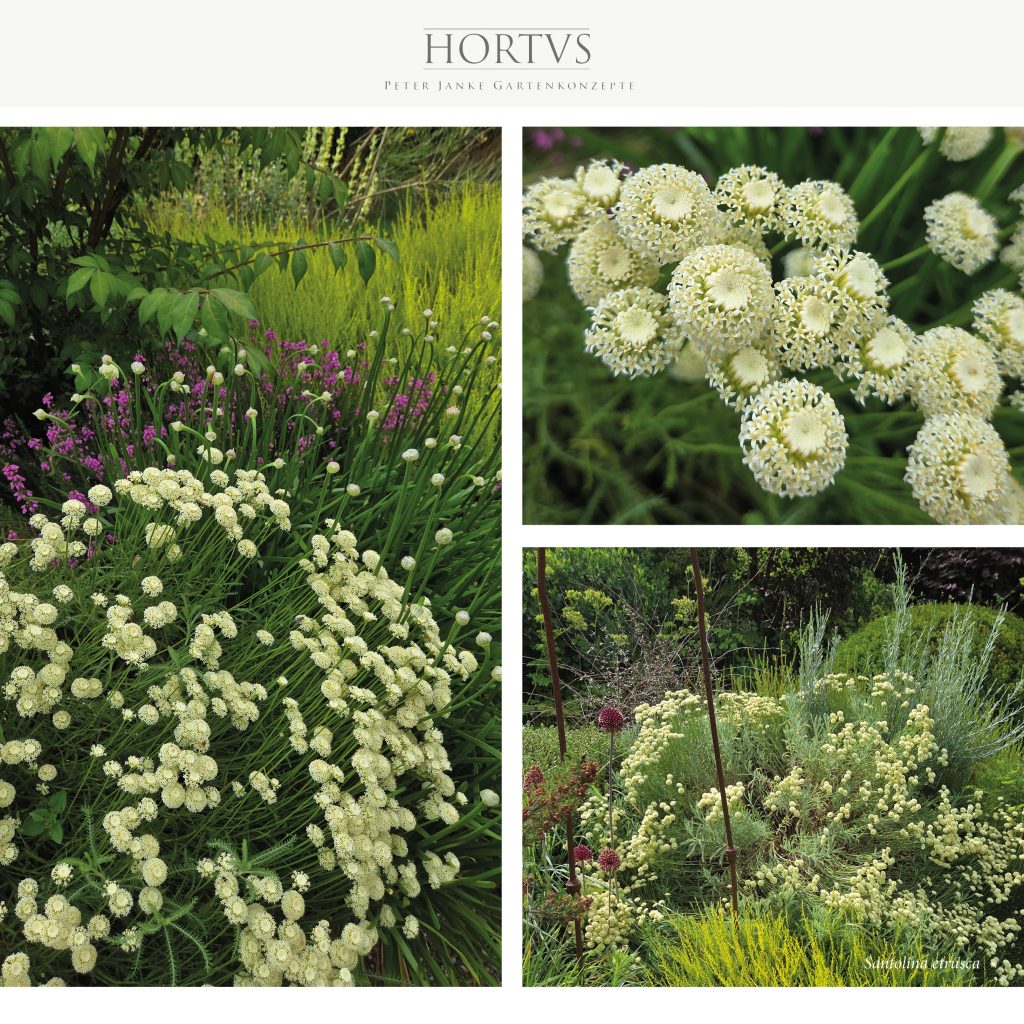
Santolina etrusca is a Mediterranean subshrub with silvery-gray, finely pinnate foliage. From June through August, numerous cream-white to pale yellow flower heads adorn the upright stems, creating a beautiful contrast to the decorative foliage. These aromatic plants are attractive throughout the gardening season and lend an elegant air to gravel gardens and sparse, sunny beds. This low-maintenance plant prefers a sunny location and well-drained, somewhat dry soil. Thanks to its high tolerance for drought, it is ideal for natural and Mediterranean-style plantings and also provides a valuable food source for numerous insects. Pruning it back by about one-third immediately after flowering maintains its compact form and increases the number of flowers the following year.
Acanthus mollis x spinosus ‘Mornings Candle’ – Acanthus
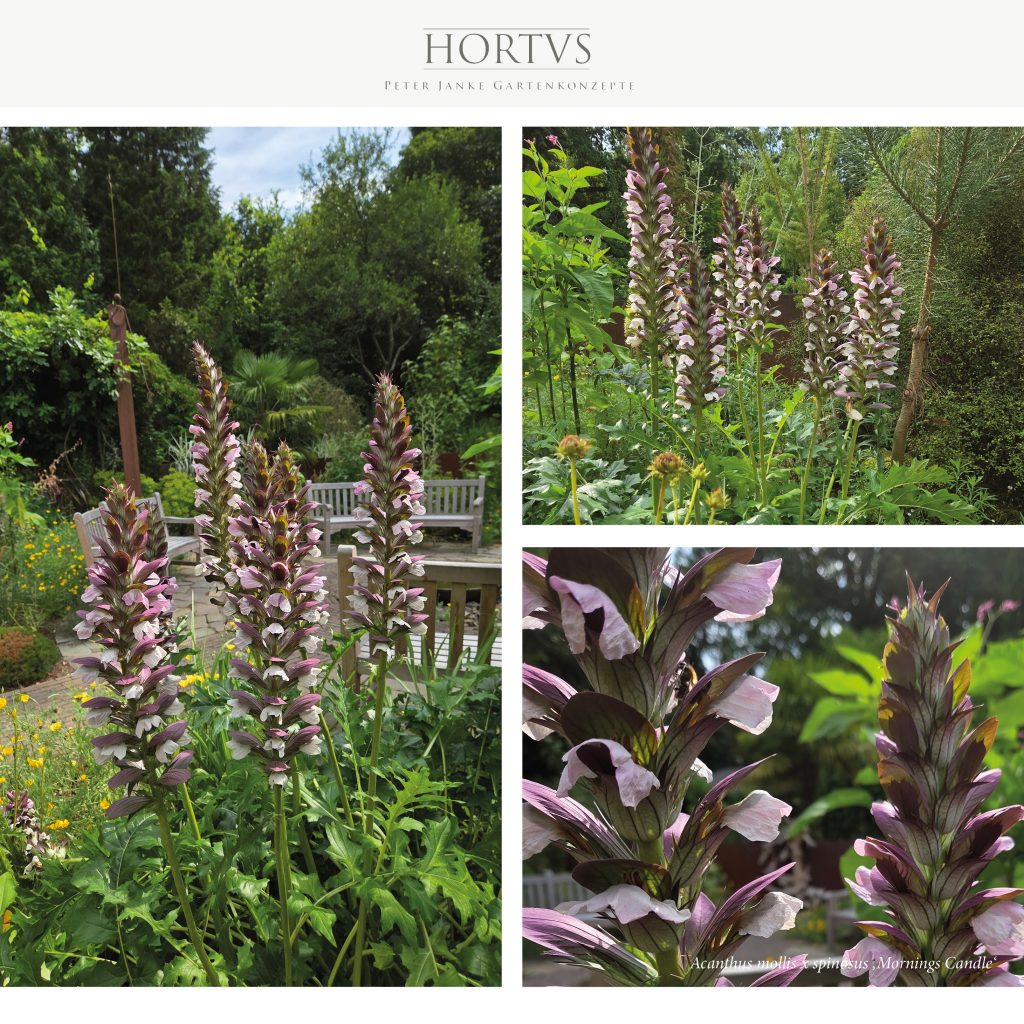
The acanthus hybrid ‘Morning Candle’ delights with its reliably abundant blooms and decorative, deep-green foliage. From June through August, numerous white flowers with delicate pink bracts appear, giving the plant an exotic charm. These develop into fantastic fruit clusters that remain an eye-catcher in the sunny flower bed well into winter. The decorative foliage remains a focal point throughout the entire gardening season and adds structure to the flower bed. In a sunny to partially shaded location with nutrient-rich, well-drained soil, ‘Morning Candle’ grows into a long-lived and low-maintenance perennial. Whether in a perennial bed or as a specimen plant, it adds stylish accents and is also a valuable food source for bees and other insects.
Oenothera lindheimeri (syn. Gaura lindheimeri) — Gaura
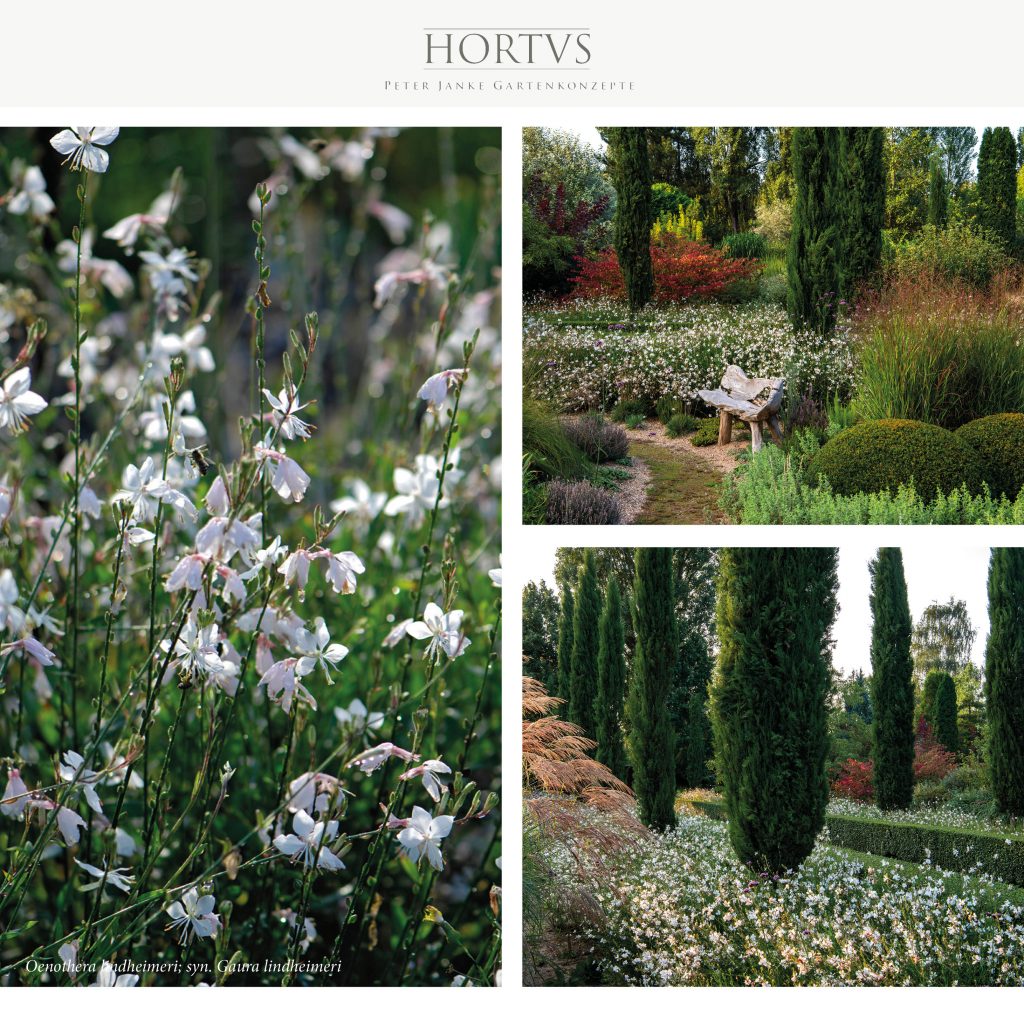
Native to the southern prairies of North America, this perennial is one of the most rewarding garden plants there is. The first flowers appear as early as June, and the blooming period often lasts well into the fall.
The numerous white flowers, tinged with pink, grow on loosely branched stems and give the plant its distinctive airiness. This effect is particularly striking when the plant is placed among robust perennials or grasses.
Thanks to its deep roots, Oenothera lindheimeri tolerates drought surprisingly well and also copes exceptionally well with hot summers. When it thrives, its flowers grace the garden for many months.
Crinum bulbispermum – Pink Hook Lily
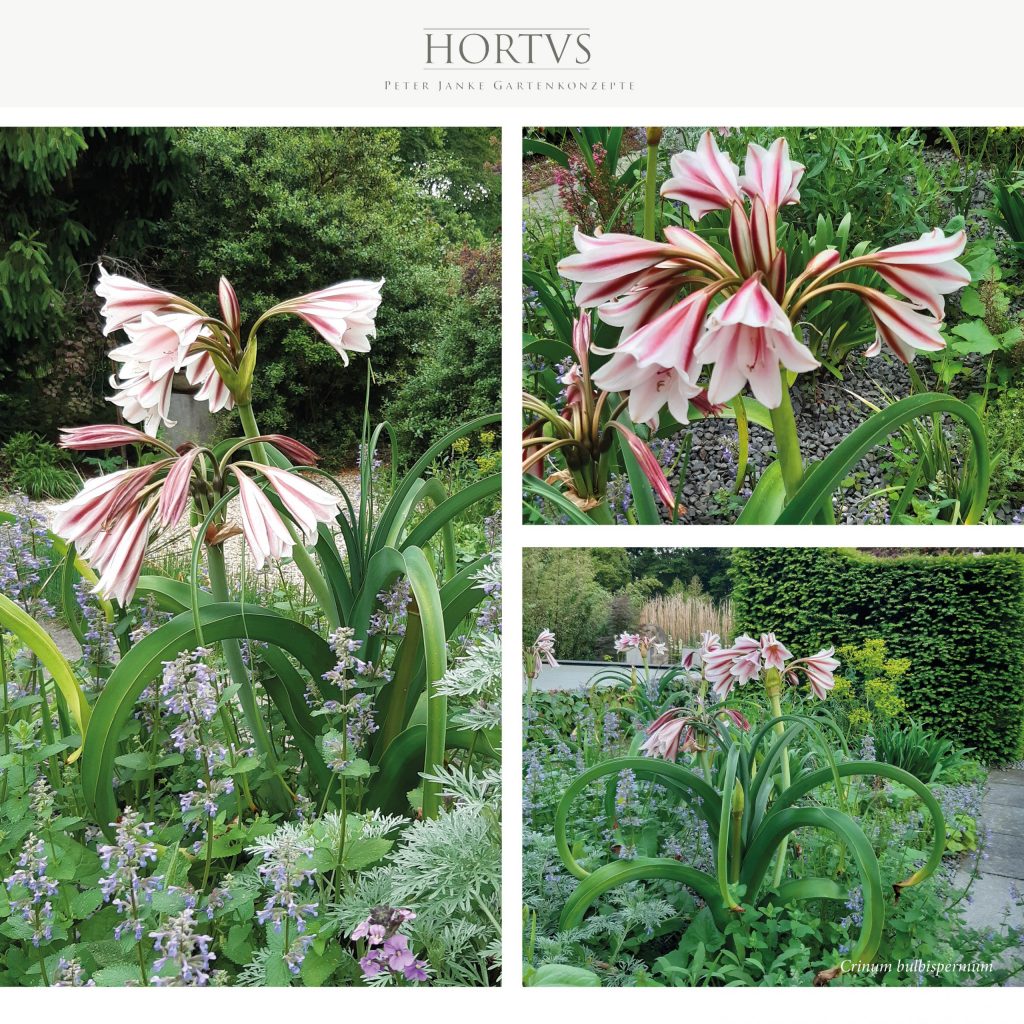
An extraordinary plant native to southern Africa. Starting as early as June, large, fragrant flowers in delicate shades of pink and white appear, floating elegantly above the long, arching foliage. Despite its exotic appearance, this impressive plant blends surprisingly harmoniously into perennial plantings.
Over the years, Crinum bulbispermum develops into a stately and long-lived plant. In a sunny, sheltered location, it thrives reliably and becomes more beautiful with each passing year. Its long, strap-shaped leaves form an attractive clump that adds texture to the planting even outside of the flowering season.
The exceptionally large seeds that form after flowering are a real eye-catcher. They add to the plant’s ornamental value well into the fall and highlight its unique character.
Tulipa sprengeri – Sprenger’s tulip
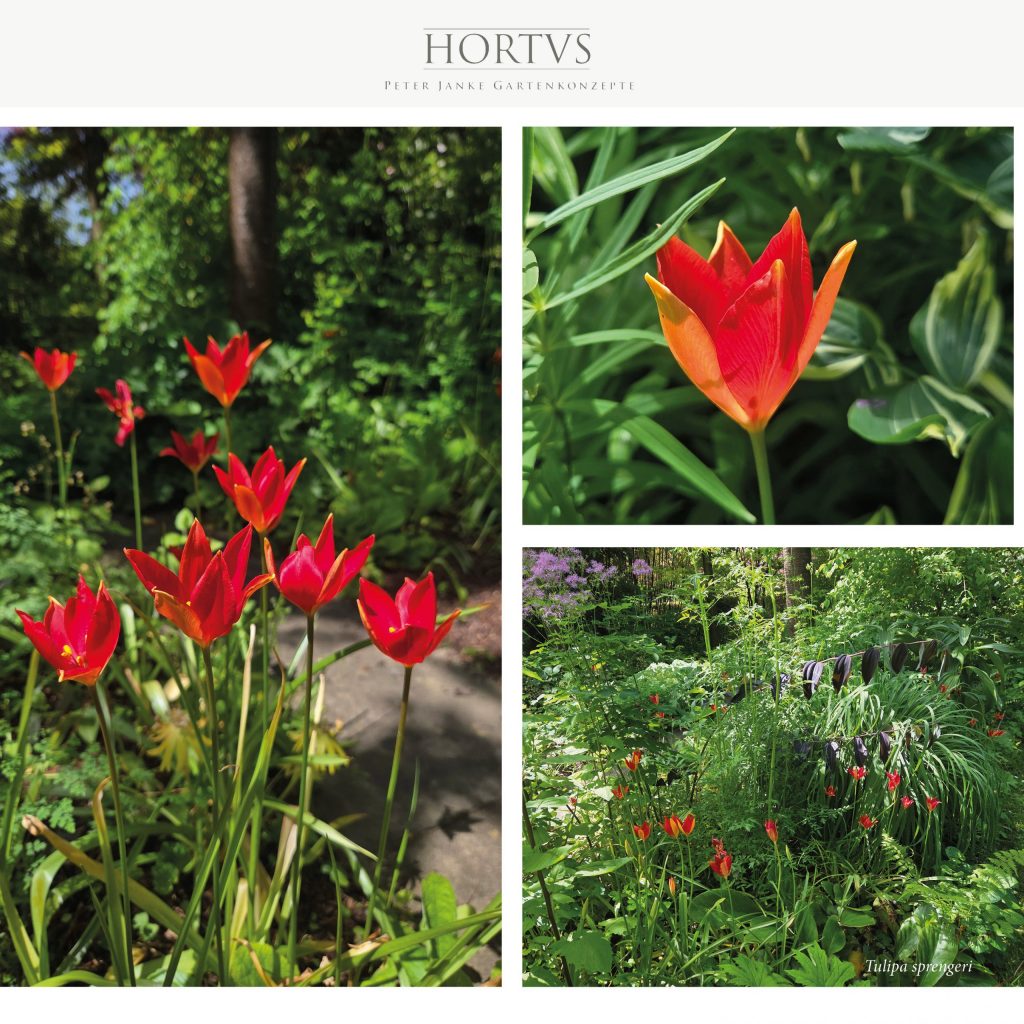
A tulip marvel! The bright, pure-red flowers of this very late-flowering tulip species are, despite their striking colour, incredibly elegant. Depending on the year, this rare geophyte beauty does not flower until late May or early June. The combination with the purple flowers and burgundy foliage of other early summer plants is magical! Here, Tulipa sprengeri grows best in a densely planted semi-shaded border amongst Thalictrum, Polygonatum and Geranium nodosum ‘Fielding’s Folly’. Despite the fairly dense planting, it self-sows reliably here
Asphodelus albus – Affodill
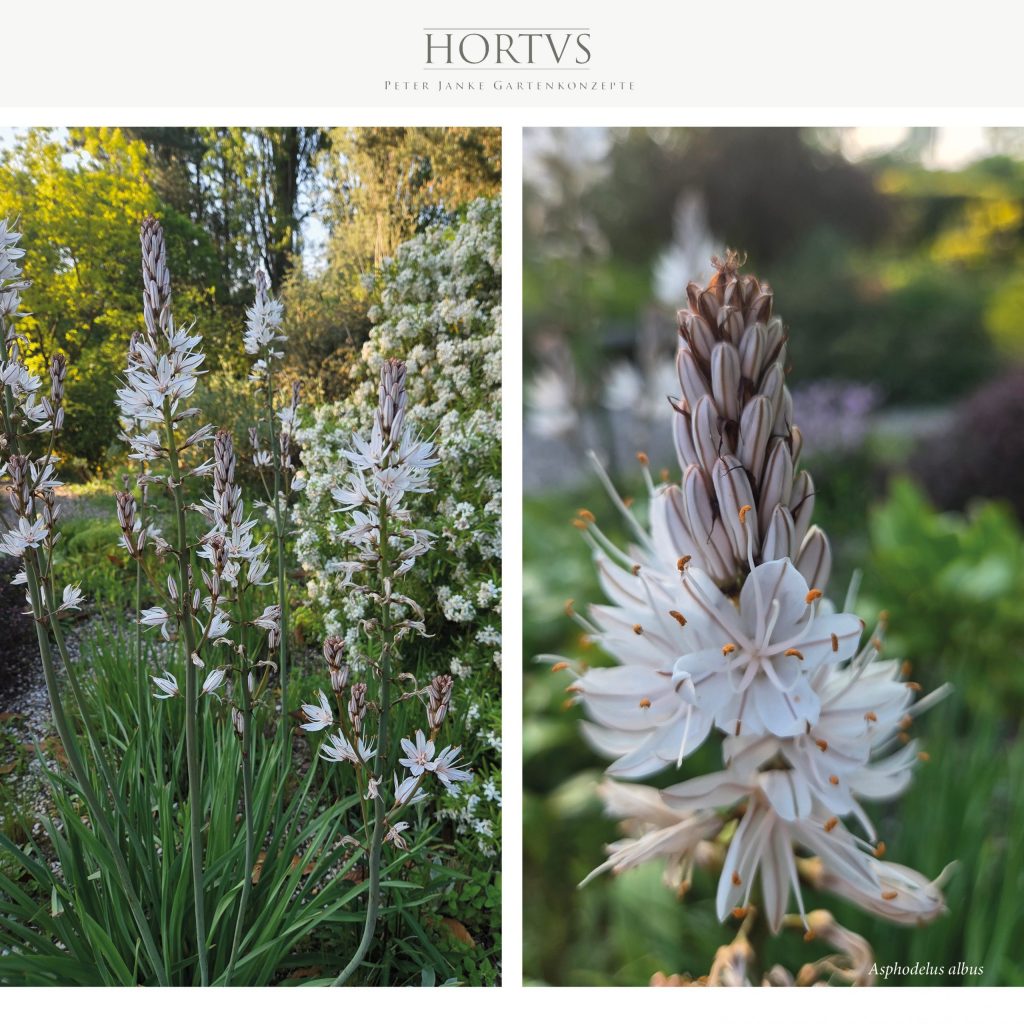
The wonderful asphodel is found throughout the Mediterranean region, which accounts for its incredible tolerance to heat and drought. In a sunny, well-drained bed, it captivates with its architectural form and its beautifully striped star-shaped flowers on panicles up to a metre high. After planting, a little patience is required until these stately and long-lived plants develop to their full splendour. The seedheads remain attractive well into winter. Asphodelus albus is a must-have for any insect-friendly garden!
Cistus – Zistrosen
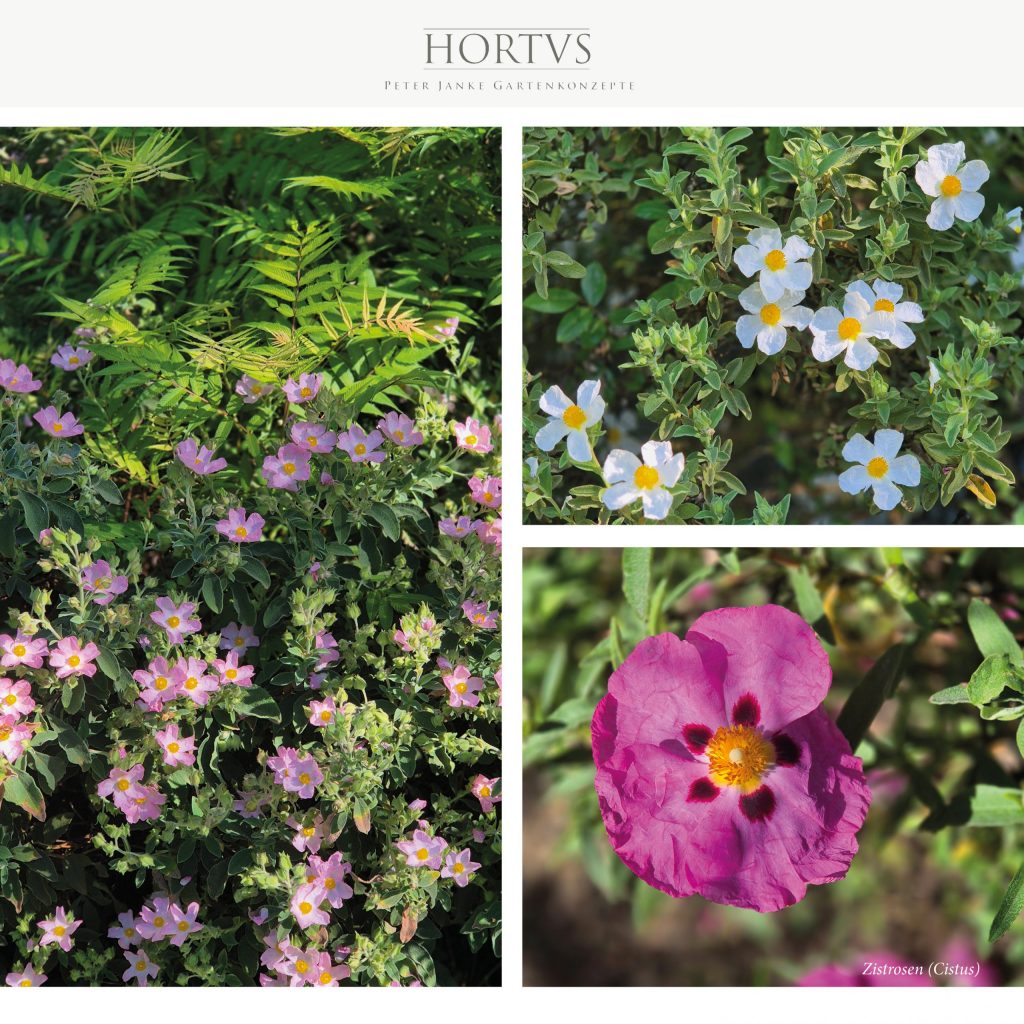
We love these beautiful Mediterranean semi-shrubs, which begin to bloom here in mid-May. Flower color and size vary considerably depending on the species and variety, and their growth habit and size also differ quite a bit. All rockroses are true sun-lovers and thrive in well-drained soil, even in the hottest spots in the garden. A light pruning immediately after flowering keeps the plants healthy and in shape. We’d be happy to discuss which variety is best suited for your garden right here at our HORTVS nursery.
Lunaria annua `Chedglow`& Lunaria annua var. albiflora `Alba Variegata`- Silberblatt
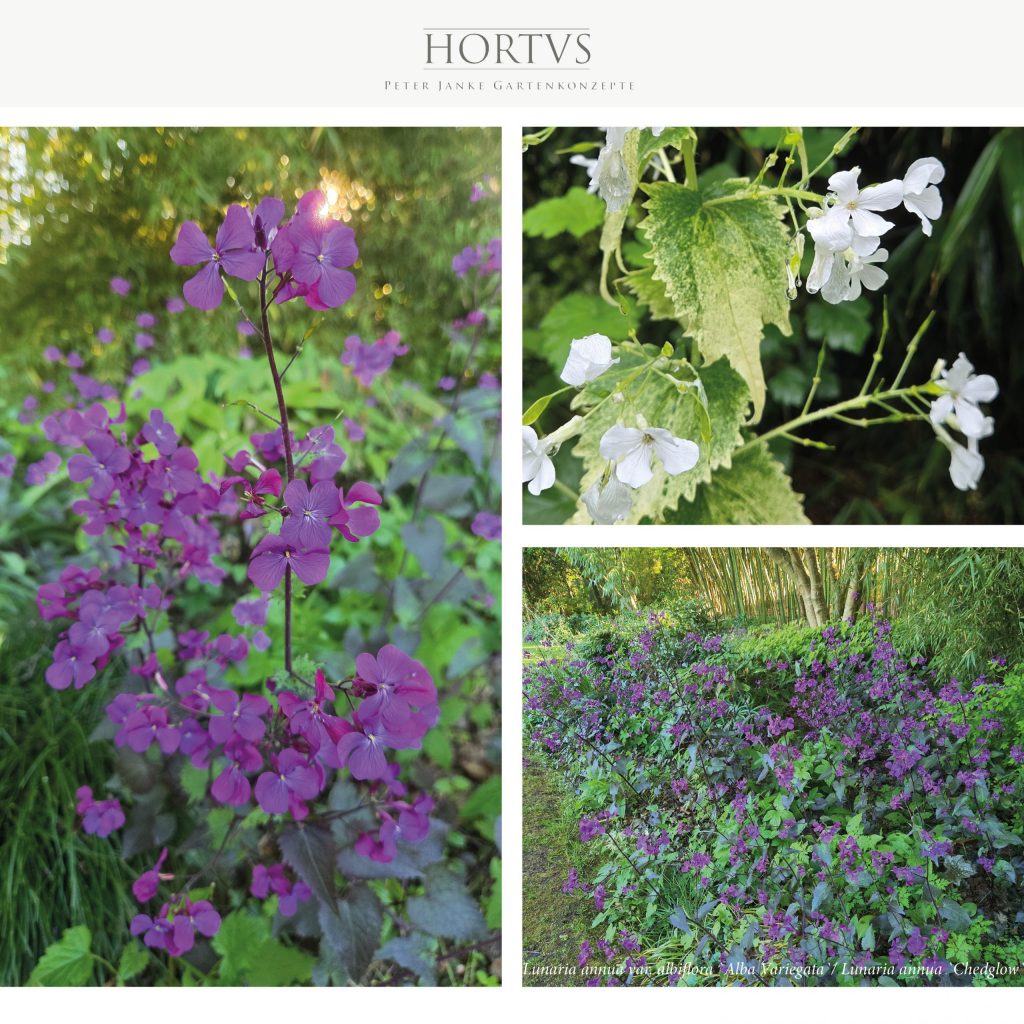
The good old honesty (Lunaria annua) has been an important part of the Central European cottage garden aesthetic for centuries. This cruciferous plant, native to southeastern Europe, produces popular, silvery, papery seed pods after its purple spring blooms, which are extremely decorative in flower beds and vases. In garden areas that are not too densely planted, or in vegetable and cut-flower beds, this monocarpic plant reliably propagates itself through self-seeding.
For those who aren’t fond of the traditional, rustic look, this genus offers several exceptional varieties: Lunaria annua var. albiflora ‘Alba Variegata’ and Lunaria annua ‘Chedglow’ are my absolute favorites!
Euphorbia cyparissias `Fens Ruby` (Purple Cypress Spurge)
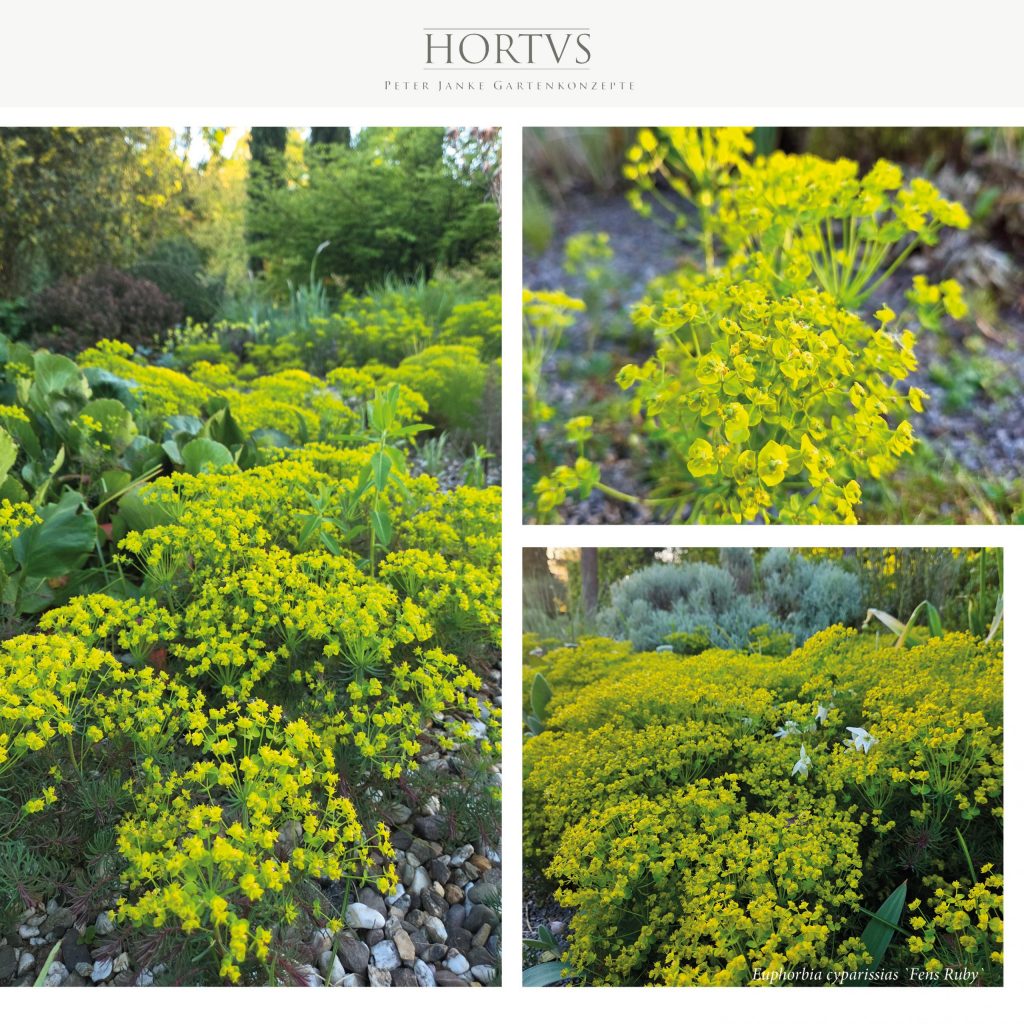
The native cypress spurge gets its name from its fine, needle-like foliage, which resembles conifer seedlings and looks incredibly decorative when paired with other stress-tolerant sun-loving perennials. The ‘Fens Ruby’ cultivar also delights with its gorgeous red spring foliage, which contrasts beautifully with the lime-green flower clusters. The countless spring blooms have a sweet, honey-like scent and offer a bountiful feast for pollinators. In sunny, barren garden locations, the species spreads vigorously through a network of fast-growing root runners. That’s why I always pair this spring gem with other hardy rock garden perennials, such as Geranium macrorrhizum, tall sedum, and white asphodel (Asphodelus albus).